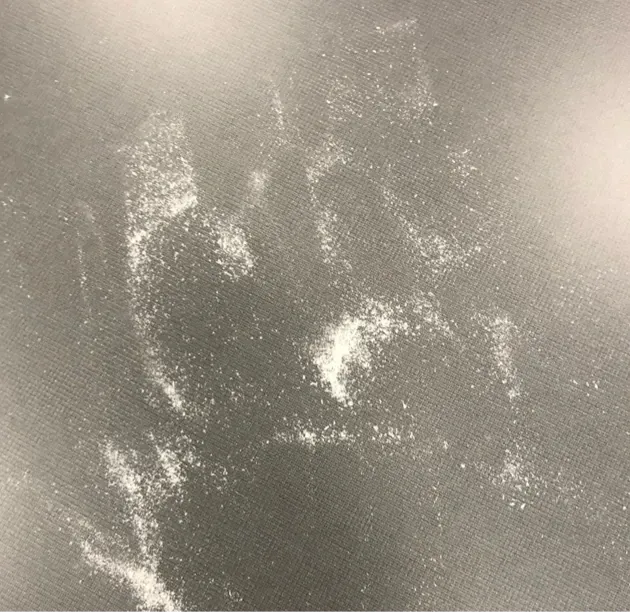
The Emergence of White Flakes
The development of large amounts of flakey, white powder from indoor coils has been a recognized industry issue for a couple of decades now. The first known occurrences were reported in residential heat pump systems using refrigerant as the heat transfer fluid. Common characteristics of these cases include coils constructed with bare aluminum fins in air cooling or dehumidifying applications. The problem typically surfaces during the heating season, within the first couple of years of the equipment’s operation, when the dehumidifying coil’s fin surface is dry of condensate.
Spread of the Issue to Commercial Equipment
Although more common in residential systems, this issue has also been reported in large commercial equipment applications and chilled water systems in light commercial and terminal products. Over the last 10 to 20 years, it has been observed that any dehumidifying coil with bare aluminum fins operating in a system that supplies forced air heating during the winter season is susceptible to producing white flakes.
Environmental Factors and Affected Areas
The issue is more prevalent in humid or milder climates that experience severe cooling seasons before the development of the problem. Various applications, including those using chilled water, chilled glycol solution, or volatile refrigerant, have demonstrated the capability to produce white flakes. These cases have not been reported in dry, arid climates or on coils used only in heating applications with hot water, hot glycol solution, or steam.
Once the coil has been installed and operated for a few cooling or heating seasons, its vulnerability to producing white flakes is drastically reduced. The problem has only been reported within the first one or two heating seasons and has not yet been reported during a cooling season. It is suggested that the coils may still produce white flakes during the cooling season, but the condensate on the fins, formed from dehumidifying the airstream, prevents the powder from becoming airborne and, thus, from being detected.
Addressing the Issue
Since no single source of the problem has been identified, the most common approach to mitigating it has been to address the coil producing the white flakes. While the coil may not be the root cause, it is the source of the flakes, making it the most likely starting point for troubleshooting. Replacing the coil with an identical one could allow the condition to return, although this isn’t guaranteed as job site conditions may change over time.
Customer Complaints and Mitigation Strategies
From a customer standpoint, the main complaint has been the housekeeping issue of white powder being distributed from the HVAC ducts and diffusers. Post-filtration or final filtration has been successfully applied to contain the flakes within the air handler systems or ductwork. While not all systems are conducive to additional filtration, it has been shown that even minimum particle-efficient filters are capable of removing the large white flakes from the airstream. Field experience has shown that coil cleaning, at best, offers only short-term relief, as flake production will inevitably return.
Permanent Solutions: Coil Replacement and Coatings
Replacing the affected coil with one that has coated aluminum fins can eliminate the problem. Common coatings include corrosion-resistant coatings, which are optional on some product lines. While this is relatively easy to accomplish in residential equipment, it requires much more effort, time, and cost to replace coils in large commercial equipment. Using alternate materials for the fin surface, such as copper or steel, will also prevent the formation of white flakes since there is no aluminum material.
There is no known material treatment or coil cleaning process that will stop the chemical breakdown reaction causing the flakes. Evaluating job site conditions, such as chemical treatments and cleaners, indoor pollution, or outdoor pollution, could help determine causal relationships. Source control of the reaction catalyst will be the best approach to successfully eliminating the problem from reoccurring in the building.