VRF Tech Support & Equipment Verification
Southwest District
Ductless Units and Compatibility Verification
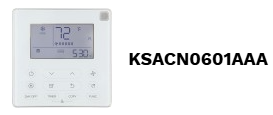
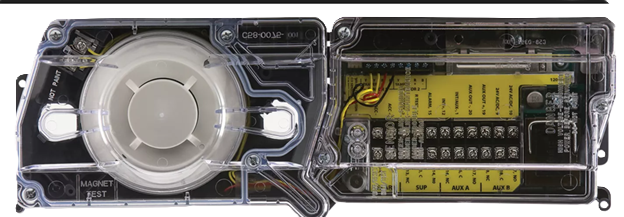
There are several different types of ductless heating and cooling systems. These systems can be combined with various indoor and outdoor unit combinations. The indoor units can be controlled by a hand held remote, wired thermostat, or a 24v interface. Verifying all the right components of your ductless system before installation can save a lot of time and avoid confusion.
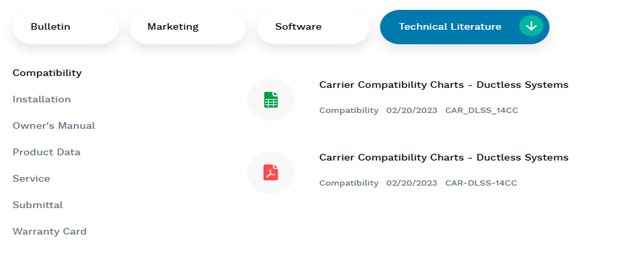
Find compatibility guidance in HVAC Partners under the "Technical Literature" header
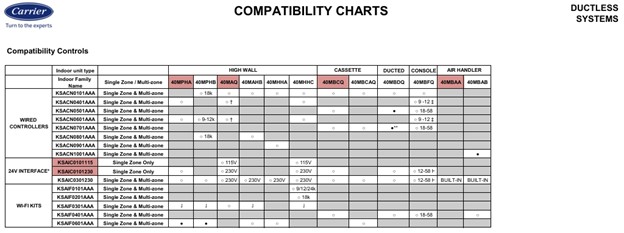
You can get on HVAC PARTNERS online to verify indoor and outdoor unit compatibility as well as thermostat compatibility for your indoor units. When you pull up your unit on HVAC PARTNERS you can find the compatibility chart under documents in the technical literature tab. The chart will show you all of the thermostat compatibility for all of the high wall, cassette, ducted, console, and air handler style indoor units.
Use the compatibility charts to verify that your equipment will operate efficiently together.
Having all of the right components for your ductless system will lead to an easier install and customer satisfaction. Running back and forth trying to gather the right parts for your ductless system can be time consuming and could make your customer uneasy about the product. It’s a good practice to hold on to the install manuals that come with your ductless system to help clear up most of the install questions. If the manuals are lost or misplaced you can find the manuals for your product online at hvacpartners.com
Verify the compatibility of your units and thermostats on HVAC Partners!
Verify the compatibility of your units and thermostats on HVAC Partners!
Verify the compatibility of your units and thermostats on HVAC Partners!
Verify the compatibility of your units and thermostats on HVAC Partners!
Verify the compatibility of your units and thermostats on HVAC Partners!
Verify the compatibility of your units and thermostats on HVAC Partners!
Disclaimer: The technical statements, information and recommendations contained herein are believed to be accurate as of the date hereof, but Mingledorff’s does not make representations or warranties, express or implied, as to its accuracy, its completeness, or the results to be obtained. The information is being provided for informational purposes only and is intended for use by persons having adequate skill and expertise regarding the proper selection, use and application of the products and recommendations and at their own risk and discretion.
Carrier has approved the use of Crossover equipment with zoning applications. The instructions for this will be released in several phases during 2026. Release dates for
Cookie Preferences
We use cookies and other tracking technologies to collect and store information, operate our website, remember your preferences, deliver targeted ads and content, and enhance your experience. You can manage or change your cookie preferences at any time through your browser or device settings. To learn more, including how we collect, use, or disclose your information, please review our Privacy Policy and Terms of Use. By interacting with this cookie banner or accessing the site, you consent to our Privacy Policy and Terms of Use, including the arbitration provision and class action waiver.
Necessary cookies help make a website usable by enabling basic functions like page navigation and access to secure areas of the website. The website cannot function properly without these cookies.
Marketing cookies are used to track visitors across websites. The intention is to display ads that are relevant and engaging for the individual user and thereby more valuable for publishers and third party advertisers.
Preference cookies enable a website to remember information that changes the way the website behaves or looks, like your preferred language or the region that you are in.