Taking NATE Online
We have recently begun teaching our NATE classes online using zoom format. This article will hopefully clear up some of


You have probably gone to classes, listened to podcast or read articles about the phase out of R-410A, and the replacement refrigerant R-454B that will be in a lot of new equipment. R-454B is not the only replacement refrigerant, as some manufactures will use other refrigerants in their equipment. In this article R410-A & R454-B will be the two refrigerants that will be compared.
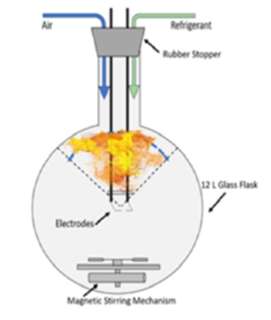
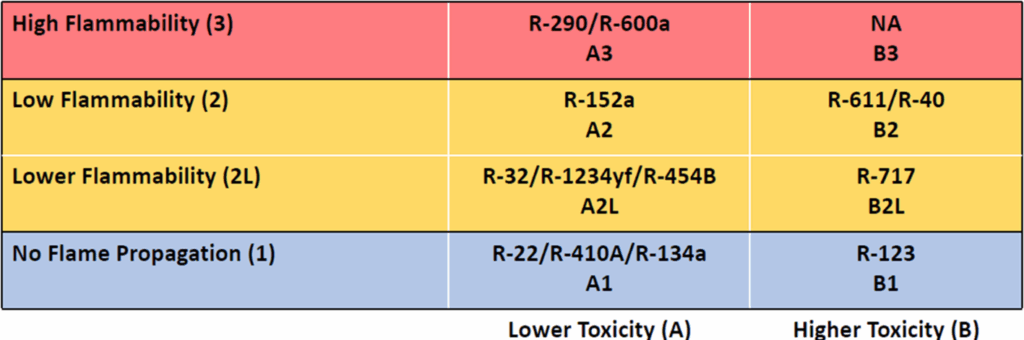
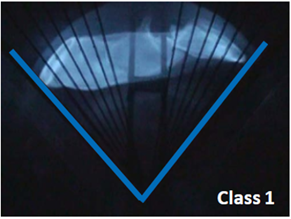
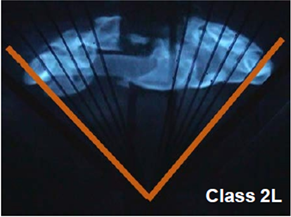
Let’s look at what is in the make up of the two refrigerants. R-454B is a blend of 68.9% R-32 & 31.1% of R-1234yf. R-32 is used in small to large equipment that heat and cool. R-1234yf is used in some of the new cars being manufactured. R-410A is a blend of 50% R-32 & 50% R-125. R-125 is used in fire extinguishers, which helps reduce the flammability of the R-32 it is mixed with. Just because R-410A has a gas that helps reduce its flammability does not mean it can’t be ignited. Scientist have a procedure for testing the flammability of refrigerants. They use a glass flask of electrodes and they interduce air and the refrigerant into the flask. Once the refrigerant is ignited, it has to stay in a 90-degree V-shape marked on the flask. Then the refrigerant is classified as being flammable or not flammable. Class 1 is not flammable and Class 2 is flammable. But R-454B did not fall into the Class 2 flammable category. The flame spread was a lot slower and fell just outside of the 90-degree testing range, so a new class was developed for it and it is Class 2L (Lower Flammability). There are also letters that classify the toxicity of the refrigerant. A is for lower toxicity and B is for higher toxicity. R-454B is an A2L lower flammability refrigerant and R-410A is an A1 Non-Flammable refrigerant.
Flam Spread in the testing flask
Another difference between the two refrigerants is it’s GWP (Global Warming Potential). The EPA (Environmental Protection Agency) has set the base GWP at 700, R-410A’s GWP is 2088 and R-454B has a GWP of 466, which is significantly lower. Some other differences are the pressures and temperatures. Below is a chart showing pressures verses saturated temperatures
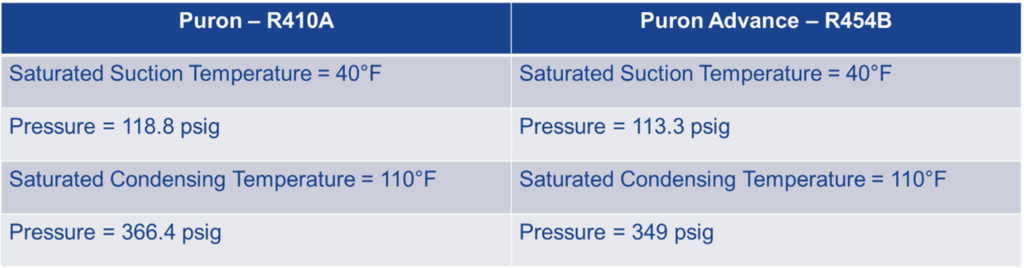
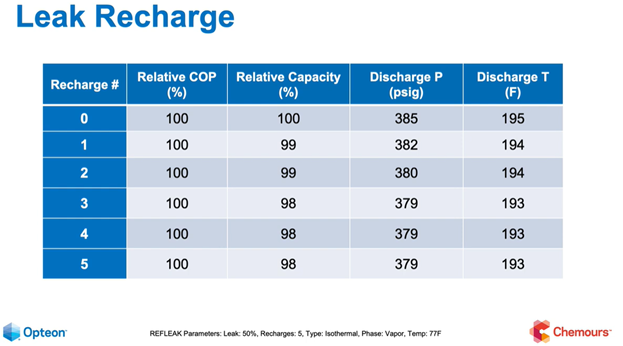
Because the refrigerants are blended with other refrigerants, you have to look at the glide or different points that the two refrigerants change state while in the equipment. R-410A had a temperature glide close to 1 degree and R-454B temperature glide is a little over 2 degrees. Because of this very small difference, it is ok to top off the refrigerant charge if the unit is a little low. R-410A had little to no capacity loss by doing this. R-454B, depending on the amount lost and added over time, could see a slight capacity loss. Below is a chart showing removing 50% of the charge 5 times and adding it back 5 times. There is a slight loss in capacity.
There are differences in the two refrigerants, but there is not a big difference. One difference is the GWP, R-410A is 78% higher than R-454B. There is not a great difference between the pressures and temperatures. But R-454B is a lower flammability refrigerant and will need safety devices added to an HVAC system incase there is a refrigerant leak. There will be different metering devices in the equipment also. R-410A and R-454B can not be used as a substitute for one another.
Sources:
Chemours
Dr. Chuck Allgood with Chemours
Disclaimer: The technical statements, information and recommendations contained herein are believed to be accurate as of the date hereof, but Mingledorff’s does not make representations or warranties, express or implied, as to its accuracy, its completeness, or the results to be obtained. The information is being provided for informational purposes only and is intended for use by persons having adequate skill and expertise regarding the proper selection, use and application of the products and recommendations and at their own risk and discretion.
We have recently begun teaching our NATE classes online using zoom format. This article will hopefully clear up some of
Coming back to work after an extended weekend of 4th of July there’s paperwork handed to you for the emergency
Carrier has approved the use of Crossover equipment with zoning applications. The instructions for this will be released in several phases during 2026. Release dates for
We use cookies and other tracking technologies to collect and store information, operate our website, remember your preferences, deliver targeted ads and content, and enhance your experience. You can manage or change your cookie preferences at any time through your browser or device settings. To learn more, including how we collect, use, or disclose your information, please review our Privacy Policy and Terms of Use. By interacting with this cookie banner or accessing the site, you consent to our Privacy Policy and Terms of Use, including the arbitration provision and class action waiver.
You are leaving our site and we cannot be held responsible for the content of external websites.