Taking NATE Online
We have recently begun teaching our NATE classes online using zoom format. This article will hopefully clear up some of


VRF Quality Assurance Manager
Gulf Coast District
What exactly does no communication mean regarding Infinity and Evolution equipment? No communication means there is no clear signal of information received by the UI (User Interface), or it has been interrupted.
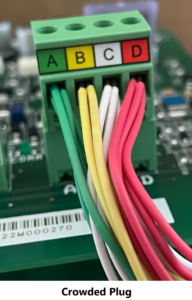
When no communication faults occur, there is a process that simplifies diagnosing the issue. Always start with the basics. Loose control wires in wire nut connections, ABCD plugs or UIs not seated perfectly, and crowded terminals can cause issues in a communicating system. Control wires running alongside or across high voltage wires can receive interference from the EM (electromagnetic) field generated by the current (amperage) from the power wires. Generally, control wires should be kept away from high voltage wires. If this is unavoidable, it is recommended to use a shielded stranded cable for the AB circuit and ground the cable on one end. Issues from interference are uncommon, but should be considered during the diagnosis.
Look for signs of moisture, especially inside of horizontal fancoils. Dirty power from wet electrical connections, as well as water damage to transformers and PC boards can cause poor communication or false codes to be generated. Many horizontal right fancoils are installed with high voltage wires entering directly above the control board. When this penetration is not sealed, there is potential for hot and/or humid air to mix with cool air inside the cabinet. This can be a source of intermittent fault codes as water condenses and drips down onto the board, then runs off and the code clears.
For all Infinity and Evolution model FE 002, 005, and 006 fancoils installed horizontal right, it is imperative to correctly “flip” the air seal assembly at the top of the coil, and relocate the drain pan support bracket to its proper location. Either of these two items missed or done incorrectly will eventually make for a water filled cabinet with completely saturated insulation. This results in an extremely wet environment inside the fancoil and will wreak havoc on all internal electrical components. Also, it can cause the exterior of the cabinet to sweat, which has its own set of issues.
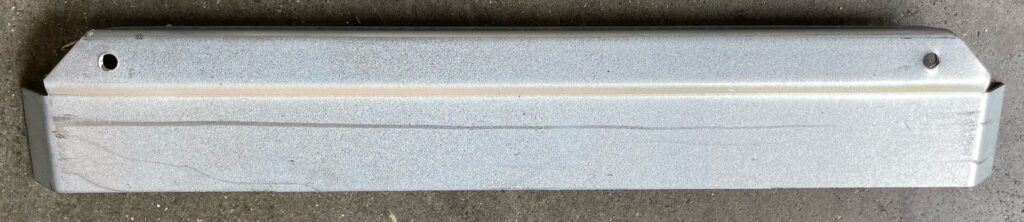
Once a cabinet is soaked, it is easy to diagnose these problems as resulting from a clogged drain line, leading to the wrong repair, and then a callback. This can happen to all Carrier, Bryant, or WeatherMaker fancoil models with an “A” coil. See below for snippets from the installation manual and photos of the support bracket.
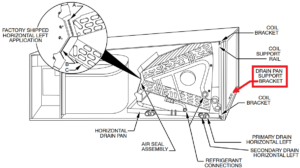
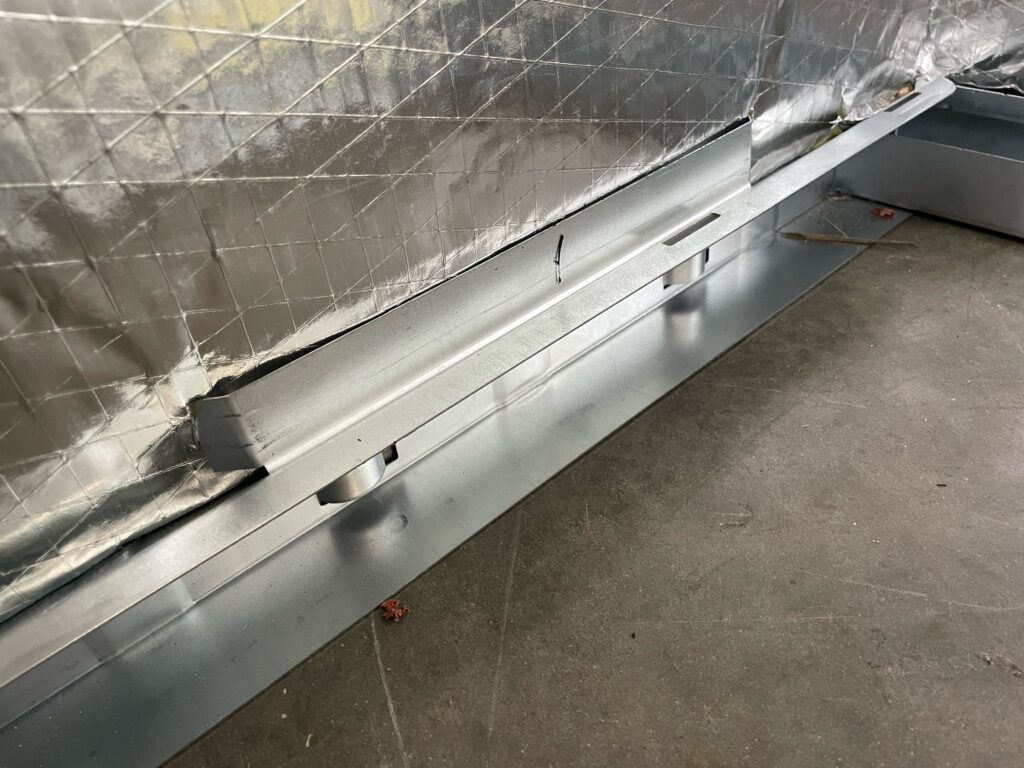
Remove horizontal drain pan support bracket from coil support rail on left side of unit and reinstall on coil support rail on right side of unit.
If inside the cabinet is dry, then verify all connections are good. Redo any crowded plug or terminal by making a pigtail in the control wire. It is recommended to only have one wire under each terminal. Another thing to look for is improperly stripped wires that are scored too deeply by wire strippers. If poor installation practices are suspected at all, then do yourself a favor and remake all connections.

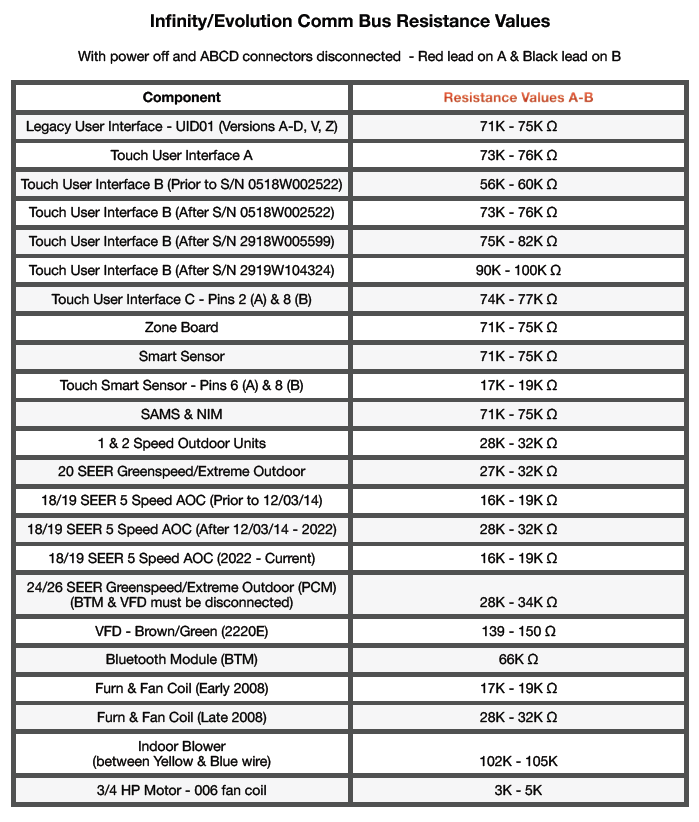
Once you have verified that all wires and connections are good, it is time to take the next step in diagnosis. Know your ohm values. Each communicating component has a specific ohm resistance range at their comm bus. Please see the chart at the end of this article for up-to-date ohm values. If all components read correctly, then the control wire(s) could be the issue. Read from the other end of the control wires and ohm through them back to each component. Any difference from your original readings indicates a flaw in the wire.
If all these possibilities have been eliminated, then advanced diagnosis is all that remains. Most Infinity and Evolution PC boards with power applied have a resting voltage of approximately 4.5-4.6 VDC on the AB pins. Specific exceptions to this rule are the early generation and current versions of 18 and 19 SEER five speed AOC boards, which have a resting 2.8 VDC, and can be identified by a lower 16-19K ohm value at the comm bus. AOC produced between December 2014 and early 2022 ohm between 28-32K and will have a resting 4.5-4.6 VDC.
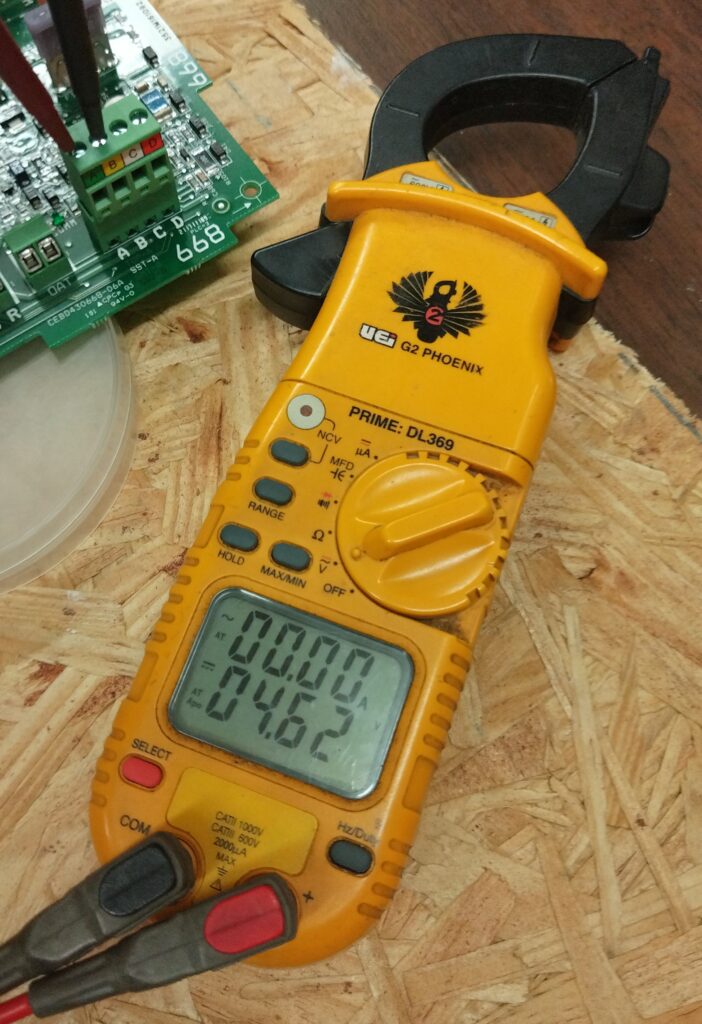
Communication is active when the UI is connected. Disconnect the UI to put the circuit at rest. It may be easier to identify what component is the issue with communication at rest versus fluctuating.
A resting voltage of 3.2 VDC or less on a system is the borderline of no communication. Comm voltage being dragged down can cause all sorts of intermittent issues, such as touchscreen UI’s becoming non-responsive, or momentary fault codes to be generated. Similar to checking ohms across the control wire, its integrity can also be checked by measuring resting VDC at the components and at the other end of the wire. A small drop of voltage of less than 1 VDC is acceptable across long lengths. If a drop of more than 1 VDC is found, the wire is likely compromised and pulling a new wire is recommended.
When a Carrier Infinity or Bryant Evolution system is communicating across all components, the VDC is constantly fluctuating. A range between .8-4.5 VDC may be seen on your digital meter in momentary flashes. An analog meter will show this as a bouncing of the needle. If problem components or wires are dragging down the communication, it can go into the millivolt range. When 24 VAC loads – such as contactor coils, gas valve solenoids, or heat relay coils – are engaged on a system running with low comm voltage, it can be the “straw that broke the camel’s back”. When these loads engage it can cause momentary no communication faults to occur, followed by the system dropping out, and then, the cycle repeats as everything comes back online. One must be methodical to find the issue. While measuring comm volts, begin a process of elimination.
A 24 SEER heat pump system with two zones has a recurring indoor communication fault which always happens on the coldest nights. It is determined the event occurs shortly after the system engages heat strips due to going through a defrost cycle. Properly made connections, and ohm values of each component are confirmed to be good. However, comm volts are fluctuating in the millivolt range.
The process of elimination with power applied and communication active is started at the fancoil PC board. First, the blower communication wire is unplugged from the board, but the low comm remains. Next, the blower is plugged back in, and the tstat wire from the fancoil to the zone damper control and smart sensor is disconnected, but the low comm still remains. The zoning is reconnected, and then the outdoor unit wire is disconnected. Immediately, the comm volts return to normal, and the issue is isolated to the outdoor unit. The wire to the outdoor is reconnected at the fancoil. This wire had already been verified to be good, but to verify again, the AB plug is disconnected from the outdoor PCM. Comm volts return to normal and the control wire is eliminated as the problem, leaving only the heat pump as the source of the issue.
Instinct would be to condemn the outdoor PCM. However, there are three different communicating components in the outdoor unit: the PCM, the Bluetooth module, and the VFD. The AB plug is connected back to the PCM. The VFD comm wire is disconnected, but the low voltage remains. The VFD is connected back and then the Bluetooth module is disconnected from the PCM. The comm volts return to normal, and thus the Bluetooth module is identified as the source of the problem. A new Bluetooth module is installed and updated through the Carrier Service Tech app, which should be done every time a component is replaced on 24/26 SEER units. The system is put through a full reinstallation at the UI (which should be done every time a communicating component is replaced). The system is checked out first in heat strip mode, and then in heat mode with a forced defrost to verify it is working properly. Finally, all functions of the rest of the system are checked and found to be good.
Learning these methods and how to use this knowledge is key to being efficient at diagnosing Infinity and Evolution communication problems. Hopefully, this article has helped you have better understanding when it comes time to diagnosing various communication issues you may encounter in the field.
Disclaimer: The technical statements, information and recommendations contained herein are believed to be accurate as of the date hereof, but Mingledorff’s does not make representations or warranties, express or implied, as to its accuracy, its completeness, or the results to be obtained. The information is being provided for informational purposes only and is intended for use by persons having adequate skill and expertise regarding the proper selection, use and application of the products and recommendations and at their own risk and discretion.
We have recently begun teaching our NATE classes online using zoom format. This article will hopefully clear up some of
Coming back to work after an extended weekend of 4th of July there’s paperwork handed to you for the emergency
Carrier has approved the use of Crossover equipment with zoning applications. The instructions for this will be released in several phases during 2026. Release dates for
We use cookies and other tracking technologies to collect and store information, operate our website, remember your preferences, deliver targeted ads and content, and enhance your experience. You can manage or change your cookie preferences at any time through your browser or device settings. To learn more, including how we collect, use, or disclose your information, please review our Privacy Policy and Terms of Use. By interacting with this cookie banner or accessing the site, you consent to our Privacy Policy and Terms of Use, including the arbitration provision and class action waiver.
You are leaving our site and we cannot be held responsible for the content of external websites.