Taking NATE Online
We have recently begun teaching our NATE classes online using zoom format. This article will hopefully clear up some of


Indoor coil corrosion followed by leak failure has been an issue in the HVAC industry for a long time. Although the occurrence rate of these failures is low nationwide, it seems that some locations see a higher failure rate than others.
A good example of this is a home with an air conditioning system that has multiple indoor coil corrosion-related failures while other homes around it with possibly the same system do not. Another example is multiple systems in a home or business where only some indoor coils are experiencing high rates of corrosion. Examples like these always leave us asking the question “Why do some indoor coils corrode faster than others?”
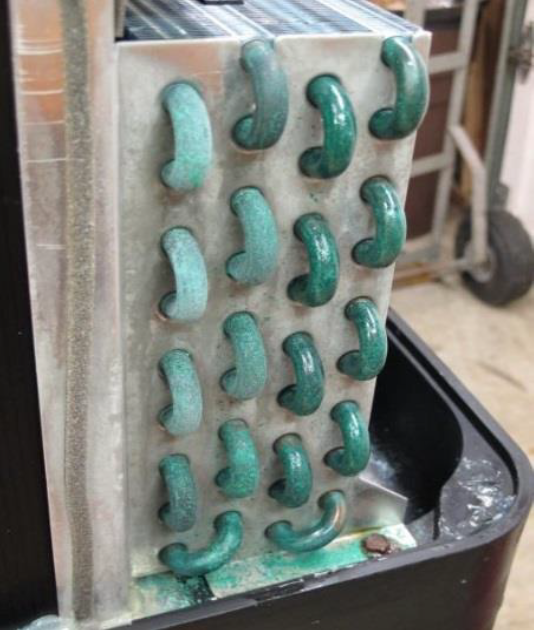
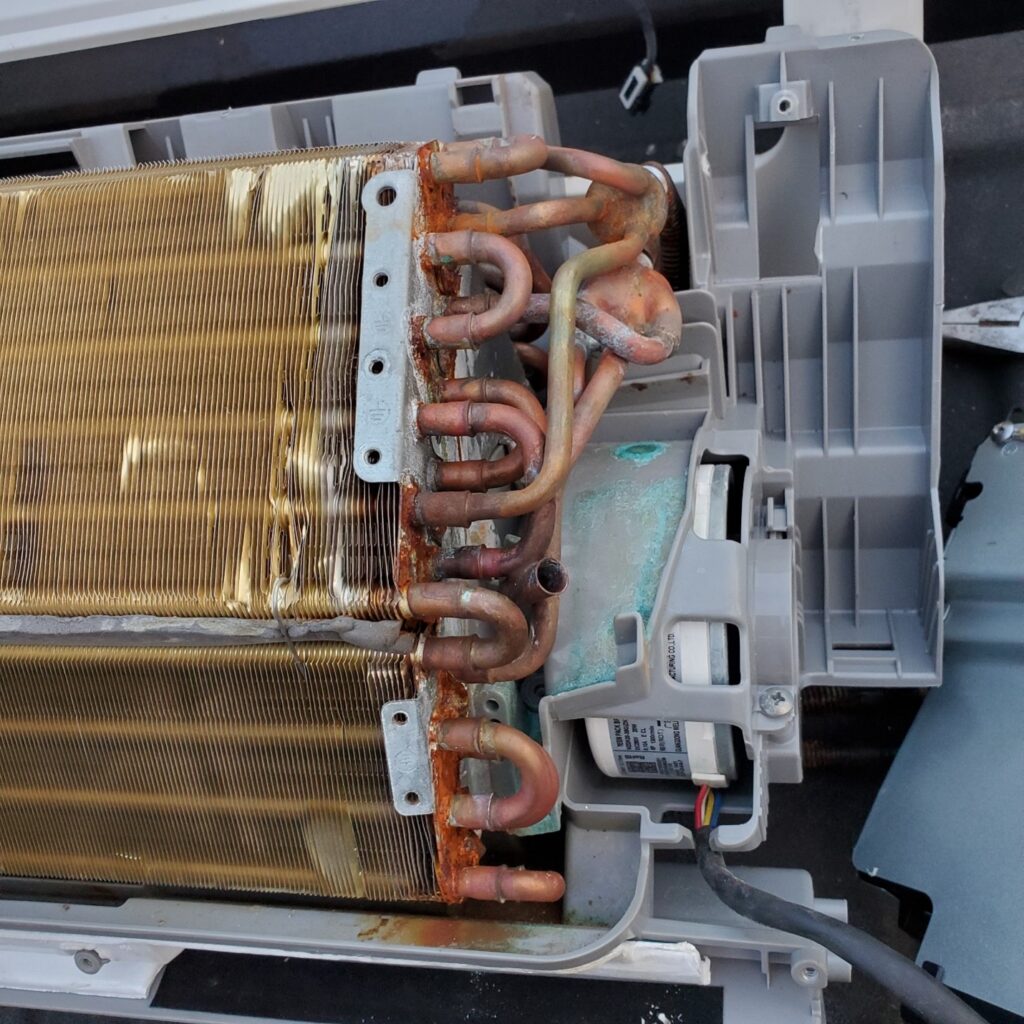
When you find evaporators like these on a customer’s home and its leaking, the next step is to replace it. However, we encourage you to search for the cause of the leak , especially when the homeowner explains to you that they had the system installed for a short period of time. Some homeowners might have more questions as to why this leak occurred, especially if they don’t use this system as often as the others. They may wonder why an evaporator coil is leaking with infrequent use.
Unfortunately, we tend to think that the evaporator coil is leaking due to a manufacturer error, but we must remember that each company has a different procedure of the manufacturing of their evaporators. So, if every company makes their coils differently, then why do you see the same issue with the different manufacturers?
What if I told you that the reason for the corrosion could be because of substances inside the house or space where the system is operating?
Although there are many potential causes of corrosion in evaporator coils, one we see most commonly is organic acids. There are many different types of organic acids, but the most common are formic and acetic acids. These acids can be found on different items in the house and there are several sources of both in and around the home.
Examples of formic acid sources: Building materials such as adhesives, cabinets, foam insulation, laminates, paint (both latex and oil-based) paneling and particle board. As well as household items like cosmetics, disinfectants, deodorizers, tobacco, wood smoke, and other vapors from electronic cigarettes.
Examples of acetic acid sources: Building materials such as vinyl acetate, cellulose fibers, plastics, paneling, particle board, plywood, silicone caulk, wallboard and wallpaper. It can also come from solvents such as vinegar and ones used in food processing.
As the examples above show, there is increasing evidence linking the cause of evaporator coil leak failures to agents present in household environments. Now, we shouldn’t tell someone the reason that their evaporator coil is corroding is because of the type of cabinets they elected to install in their home. The examples are just to show that there are substances like these acids that carry the risk of a high corrosion rate, and some can be higher than others. So next time you have a coil that is corroding and leading to leaks look at the overall application and ask yourself “What in this environment could be leading to the corrosion on this evaporator coil?“
Disclaimer: The technical statements, information and recommendations contained herein are believed to be accurate as of the date hereof, but Mingledorff’s does not make representations or warranties, express or implied, as to its accuracy, its completeness, or the results to be obtained. The information is being provided for informational purposes only and is intended for use by persons having adequate skill and expertise regarding the proper selection, use and application of the products and recommendations and at their own risk and discretion.
We have recently begun teaching our NATE classes online using zoom format. This article will hopefully clear up some of
Coming back to work after an extended weekend of 4th of July there’s paperwork handed to you for the emergency
Carrier has approved the use of Crossover equipment with zoning applications. The instructions for this will be released in several phases during 2026. Release dates for
We use cookies and other tracking technologies to collect and store information, operate our website, remember your preferences, deliver targeted ads and content, and enhance your experience. You can manage or change your cookie preferences at any time through your browser or device settings. To learn more, including how we collect, use, or disclose your information, please review our Privacy Policy and Terms of Use. By interacting with this cookie banner or accessing the site, you consent to our Privacy Policy and Terms of Use, including the arbitration provision and class action waiver.
You are leaving our site and we cannot be held responsible for the content of external websites.