Brazing


Brazing is the process of joining two metals together without the wick effect that solder has.


It consists of two similar metals or dissimilar metals being joined by a brazing rod that melts before the metal being joined will. This will help assist in the bonding process. You can butt the two pieces together and braze them and it will be stronger than a soldered joint. The copper pipes can get red and silver solder will already be melted at this point.


Now a few other terms we must be aware of:


Liquidous temperature is the lowest temperature at which a metal is liquid. Solidus temperature is the highest temperature at which the metal is completely solid.


The temperature at which metal melts is called its melting point.


Brazing uses a higher temperature to melt the rods than soldering. Gas torches such as MAPP gas or oxy acetylene could be used depending on the environment and the size of pipe. MAPP gas works well in non-windy areas for up to ¾ inch pipe. Anything larger than that would push the limits of the heat.


In brazing, the components that make up the rods is determined by the metals you want to join. For the HVACR industry, we typically use silver solder containing different percentages of silver. This will determine the fluidity of the rod on the metal being joined, the cleanliness of the joint for aesthetics, and the strength of the joint.


Flux can come in various forms such as a paste or a coating on the rods. In the example for the HVACR purposes we will use 15% silver solder. An example composition of 15% Silver Solder is: 15% Silver, 80% Copper, 5% Phosphorous. In joining copper to copper, none of these phosphorus/silver/copper rods need flux or would even benefit from it. The phosphorus allows the rod to self-flux on copper. So, if you use the silver solder it has phosphorus in it and does not need flux. It is the flux!


Example: Two pipes cleaned and placed inside a coupling. Heat the pipes until the 15 percent silver solder melts and spreads smoothly along the metal joint between the pipe and the coupling. Then do the other pipe at the joint at the coupling as well. Then stop and allow to cool. Or use a wet rag to cool it down.

Round 2 terminal capacitor
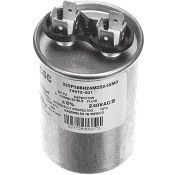
Silver cylindrical electrical capacitor with two terminals on top and a printed label

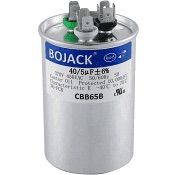
Round 3 Terminal Dual Capacitor

Silver BOJACK electrical capacitor with terminals on top and blue label, isolated on white background

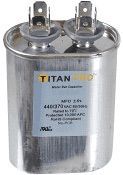
Oval Capacitor

Silver cylindrical Titan capacitor with two terminal posts on top
Silver rectangular 9-volt battery with two top terminals on a white background

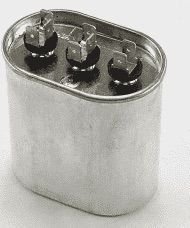
Oval Dual Capacitor

Start Capacitor - Black

Brown cardboard tube filled with torn paper scraps

Start Capacitor - Brown

Tanner Stinson

Technical Services Manager North Georgia District

June 2, 2022

Alerts vs Alarms on the Comfort Link

Disclaimer- This article does not detail on how to reset alarms because a previous article was done on this already. You can view that article here.


When using the comfort link to check out alarms and alerts you might wonder: is there a difference or are they the same? Which one shuts down the whole unit and which one will leave it running or partially running? I will get into that here and clear up some of the confusion with how the Comfort Link controller dictates all of this.


There is a difference with alerts and alarms. In the controls manual it defines these as follows:


  • T — Alert: Part of the unit is down, but the unit is still partially able to provide cooling or heating.

  • A — Alarm: The unit is down and is unable to provide cooling or heating.

Let’s start with the alert or code that begins with the letter T. Usually, this is not a full shut down alert code. In this mode the circuit with the problem code will not run and the secondary circuit takes the lead and attempts to condition the space. So, if you were to check alarm history you would see alerts starting with a T for a specific circuit depending on how many are available to the unit. 

Now let’s go over when the Comfort Link controller has an alarm light indicated on the unit. It is in an alarm state and will not run without technician intervention. The controller has to be reset and the responsibility falls on the technician to troubleshoot the issue.

Where do alerts or alarms start? In the manual it states they start as pre-alerts. This is defined below :


  • P — Pre-Alert: Part of the unit is temporarily down. The alarm is not broadcast on the CCN network. The alarm relay is not energized. After an allowable number of retries, if the function does not recover, the pre-alert will be upgraded to an alert or an alarm


For both alerts and alarms they start out as pre-alerts. They get upgraded after a certain amount of startup has been tried. These usually follow a three-strike system or something similar. On the third start if the issue persists it will either go into alert or alarm depending on what it is.

Depending on what code the unit is indicating it can lead you in the right direction. Confirm the controls manual when you can to ensure that the right error code is being defined. Not all Comfort Link manuals are the same nor alarm and alert codes are the same. Each unit differs.


More to Explore

September 16, 2026
Disclaimer: The technical statements, information and recommendations contained herein are believed to be accurate as of the date hereof, but Mingledorff’s does not make representations or warranties, express or implied, as to its accuracy, its completeness, or the results to be obtained. The information is being provided for informational purposes only and is intended for use by persons having adequate skill and expertise regarding the proper selection, use and application of the products and recommendations and at their own risk and discretion. 
By Jesse Van Atta September 16, 2026
Disclaimer: The technical statements, information and recommendations contained herein are believed to be accurate as of the date hereof, but Mingledorff’s does not make representations or warranties, express or implied, as to its accuracy, its completeness, or the results to be obtained. The information is being provided for informational purposes only and is intended for use by persons having adequate skill and expertise regarding the proper selection, use and application of the products and recommendations and at their own risk and discretion.